Philosophical questions with no answers

I love this, eight great philosophical questions we’ll never solve.

Although I like to think we will solve them…one day.

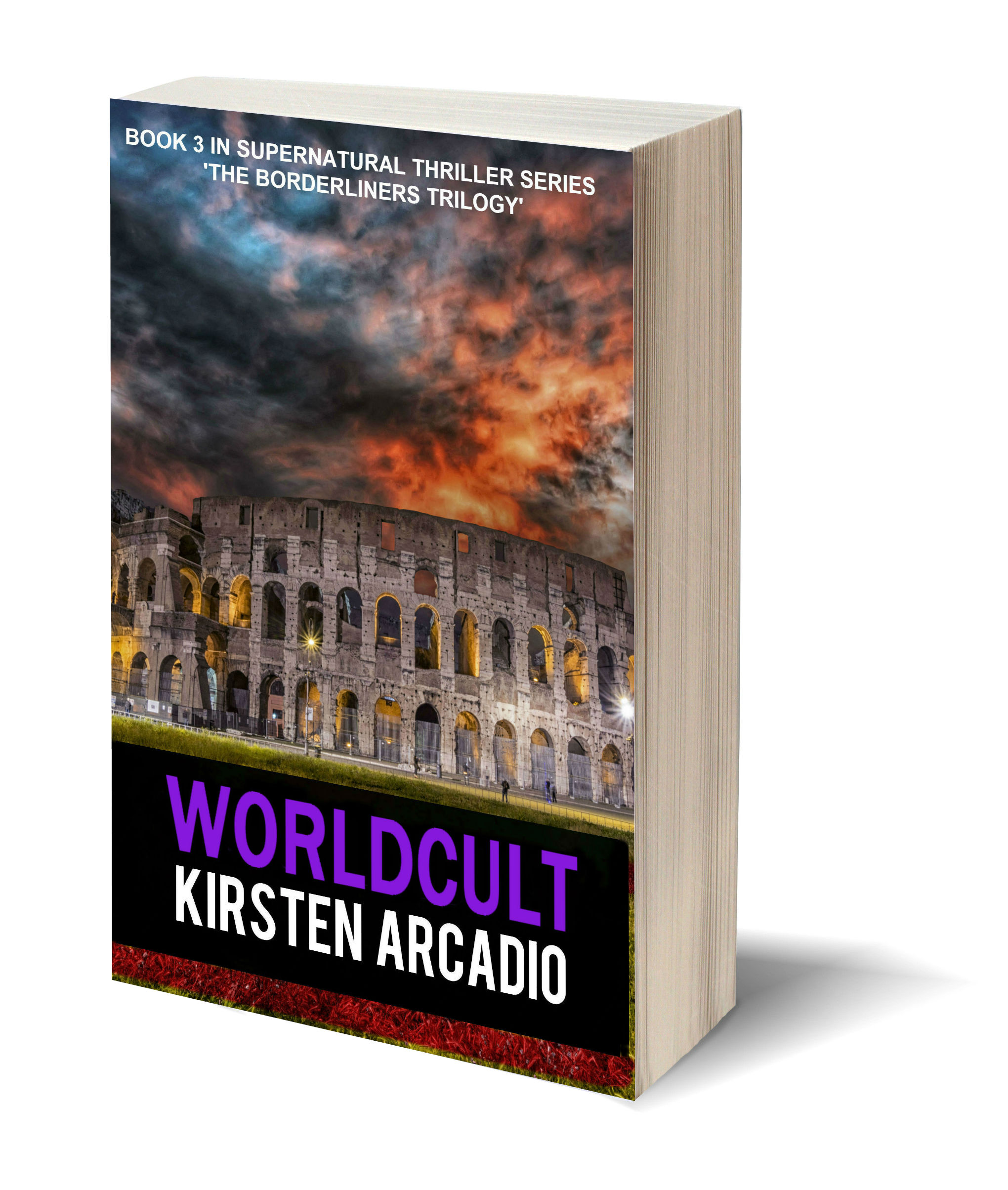
In my books I explore some of these. Look out for #2 and #3 in my upcoming book, Split Symmetry, and number #5 and #7 in Borderliners. #7 also features in my third book, WorldCult.

Reblogged from iO9.

1. Why is there something rather than nothing?

Our presence in the universe is something too bizarre for words. The mundaneness of our daily lives cause us take our existence for granted — but every once in awhile we’re cajoled out of that complacency and enter into a profound state of existential awareness, and we ask: Why is there all this stuff in the universe, and why is it governed by such exquisitely precise laws? And why should anything exist at all? We inhabit a universe with such things as spiral galaxies, the aurora borealis, and SpongeBob Squarepants. And as Sean Carroll notes, “Nothing about modern physics explains why we have these laws rather than some totally different laws, although physicists sometimes talk that way — a mistake they might be able to avoid if they took philosophers more seriously.” And as for the philosophers, the best that they can come up with is the anthropic principle — the notion that our particular universe appears the way it does by virtue of our presence as observers within it — a suggestion that has an uncomfortably tautological ring to it.

2. Is our universe real?

This the classic Cartesian question. It essentially asks, how do we know that what we see around us is the real deal, and not some grand illusion perpetuated by an unseen force (who René Descartes referred to as the hypothesized ‘evil demon’)? More recently, the question has been reframed as the “brain in a vat” problem, or the Simulation Argument. And it could very well be that we’re the products of an elaborate simulation. A deeper question to ask, therefore, is whether the civilization running the simulation is also in a simulation — a kind of supercomputer regression (or simulationception). Moreover, we may not be who we think we are. Assuming that the people running the simulation are also taking part in it, our true identities may be temporarily suppressed, to heighten the realness of the experience. This philosophical conundrum also forces us to re-evaluate what we mean by “real.” Modal realists argue that if the universe around us seems rational (as opposed to it being dreamy, incoherent, or lawless), then we have no choice but to declare it as being real and genuine. Or maybe, as Cipher said after eating a piece of “simulated” steak in The Matrix, “Ignorance is bliss.”

3. Do we have free will?

Also called the dilemma of determinism, we do not know if our actions are controlled by a causal chain of preceding events (or by some other external influence), or if we’re truly free agents making decisions of our own volition. Philosophers (and now some scientists) have been debating this for millennia, and with no apparent end in sight. If our decision making is influenced by an endless chain of causality, then determinism is true and we don’t have free will. But if the opposite is true, what’s called indeterminism, then our actions must be random — what some argue is still not free will. Conversely, libertarians (no, not political libertarians, those are other people), make the case for compatibilism — the idea that free will is logically compatible with deterministic views of the universe. Compounding the problem are advances in neuroscience showing that our brains make decisions before we’re even conscious of them. But if we don’t have free will, then why did we evolve consciousness instead of zombie-minds? Quantum mechanics makes this problem even more complicated by suggesting that we live in a universe of probability, and that determinism of any sort is impossible. And as Linas Vepstas has said, “Consciousness seems to be intimately and inescapably tied to the perception of the passage of time, and indeed, the idea that the past is fixed and perfectly deterministic, and that the future is unknowable. This fits well, because if the future were predetermined, then there’d be no free will, and no point in the participation of the passage of time.”

4. Does God exist?

Simply put, we cannot know if God exists or not. Both the atheists and believers are wrong in their proclamations, and the agnostics are right. True agnostics are simply being Cartesian about it, recognizing the epistemological issues involved and the limitations of human inquiry. We do not know enough about the inner workings of the universe to make any sort of grand claim about the nature of reality and whether or not a Prime Mover exists somewhere in the background. Many people defer to naturalism — the suggestion that the universe runs according to autonomous processes — but that doesn’t preclude the existence of a grand designer who set the whole thing in motion (what’s called deism). And as mentioned earlier, we may live in a simulation where the hacker gods control all the variables. Or perhaps the gnostics are right and powerful beings exist in some deeper reality that we’re unaware of. These aren’t necessarily the omniscient, omnipotent gods of the Abrahamic traditions — but they’re (hypothetically) powerful beings nonetheless. Again, these aren’t scientific questions per se — they’re more Platonic thought experiments that force us to confront the limits of human experience and inquiry.

5. Is there life after death?

Before everyone gets excited, this is not a suggestion that we’ll all end up strumming harps on some fluffy white cloud, or find ourselves shoveling coal in the depths of Hell for eternity. Because we cannot ask the dead if there’s anything on the other side, we’re left guessing as to what happens next. Materialists assume that there’s no life after death, but it’s just that — an assumption that cannot necessarily be proven. Looking closer at the machinations of the universe (or multiverse), whether it be through a classical Newtonian/Einsteinian lens, or through the spooky filter of quantum mechanics, there’s no reason to believe that we only have one shot at this thing called life. It’s a question of metaphysics and the possibility that the cosmos (what Carl Sagan described as “all that is or ever was or ever will be”) cycles and percolates in such a way that lives are infinitely recycled. Hans Moravec put it best when, speaking in relation to the quantum Many Worlds Interpretation, said that non-observance of the universe is impossible; we must always find ourselves alive and observing the universe in some form or another. This is highly speculative stuff, but like the God problem, is one that science cannot yet tackle, leaving it to the philosophers.

6. Can you really experience anything objectively?

There’s a difference between understanding the world objectively (or at least trying to, anyway) and experiencing it through an exclusively objective framework. This is essentially the problem of qualia — the notion that our surroundings can only be observed through the filter of our senses and the cogitations of our minds. Everything you know, everything you’ve touched, seen, and smelled, has been filtered through any number of physiological and cognitive processes. Subsequently, your subjective experience of the world is unique. In the classic example, the subjective appreciation of the color red may vary from person to person. The only way you could possibly know is if you were to somehow observe the universe from the “conscious lens” of another person in a sort of Being John Malkovich kind of way — not anything we’re likely going to be able to accomplish at any stage of our scientific or technological development. Another way of saying all this is that the universe can only be observed through a brain (or potentially a machine mind), and by virtue of that, can only be interpreted subjectively. But given that the universe appears to be coherent and (somewhat) knowable, should we continue to assume that its true objective quality can never be observed or known? It’s worth noting that much of Buddhist philosophy is predicated on this fundamental limitation (what they call emptiness), and a complete antithesis to Plato’s idealism.

7. What is the best moral system?

Essentially, we’ll never truly be able to distinguish between “right” and “wrong” actions. At any given time in history, however, philosophers, theologians, and politicians will claim to have discovered the best way to evaluate human actions and establish the most righteous code of conduct. But it’s never that easy. Life is far too messy and complicated for there to be anything like a universal morality or an absolutist ethics. The Golden Rule is great (the idea that you should treat others as you would like them to treat you), but it disregards moral autonomy and leaves no room for the imposition of justice (such as jailing criminals), and can even be used to justify oppression (Immanuel Kant was among its most staunchest critics). Moreover, it’s a highly simplified rule of thumb that doesn’t provision for more complex scenarios. For example, should the few be spared to save the many? Who has more moral worth: a human baby or a full-grown great ape? And as neuroscientists have shown, morality is not only a culturally-ingrained thing, it’s also a part of our psychologies (the Trolly Problem is the best demonstration of this). At best, we can only say that morality is normative, while acknowledging that our sense of right and wrong will change over time.

8. What are numbers?

We use numbers every day, but taking a step back, what are they, really — and why do they do such a damn good job of helping us explain the universe (such as Newtonian laws)? Mathematical structures can consist of numbers, sets, groups, and points — but are they real objects, or do they simply describe relationships that necessarily exist in all structures? Plato argued that numbers were real (it doesn’t matter that you can’t “see” them), but formalists insisted that they were merely formal systems (well-defined constructions of abstract thought based on math). This is essentially an ontological problem, where we’re left baffled about the true nature of the universe and which aspects of it are human constructs and which are truly tangible.

Comments Off on Philosophical questions with no answers

Filed under Novel writing

Genre marketing

I recently enrolled on a writing course, Exploring Genre’, run by prolific writer, editor and teacher, Tom Bromley, at PWA. Why?

As readers of this blog may have noticed, genre is something which has been taxing my mind for some time. Genre, for me, is a doubled-edged sword. I’m a marketing professional by trade and the logic behind any good marketing campaign is the same, and always has been.

Why genre fiction equates to smart marketing

Marketers talk a lot about market segments and quantifying them. You know, roughly, who your audience is, but in order to engage successfully with them, you need to narrow it down. Normally competitive analysis and positioning helps to sort out which market is not only the best fit for you product but also the one likely to be easier to compete within. So then (as any good marketer knows) you test the theory to end up with a proof of concept. And what any marketing person worth their salt will ascertain from looking at the publishing business is that awareness of genre equates to smart marketing in the world of book sales. Ask any best-selling indie author, and they will tell you that. This blog ‘Write to Done’ hammers this point home very well.

My test-run novel, Borderliners

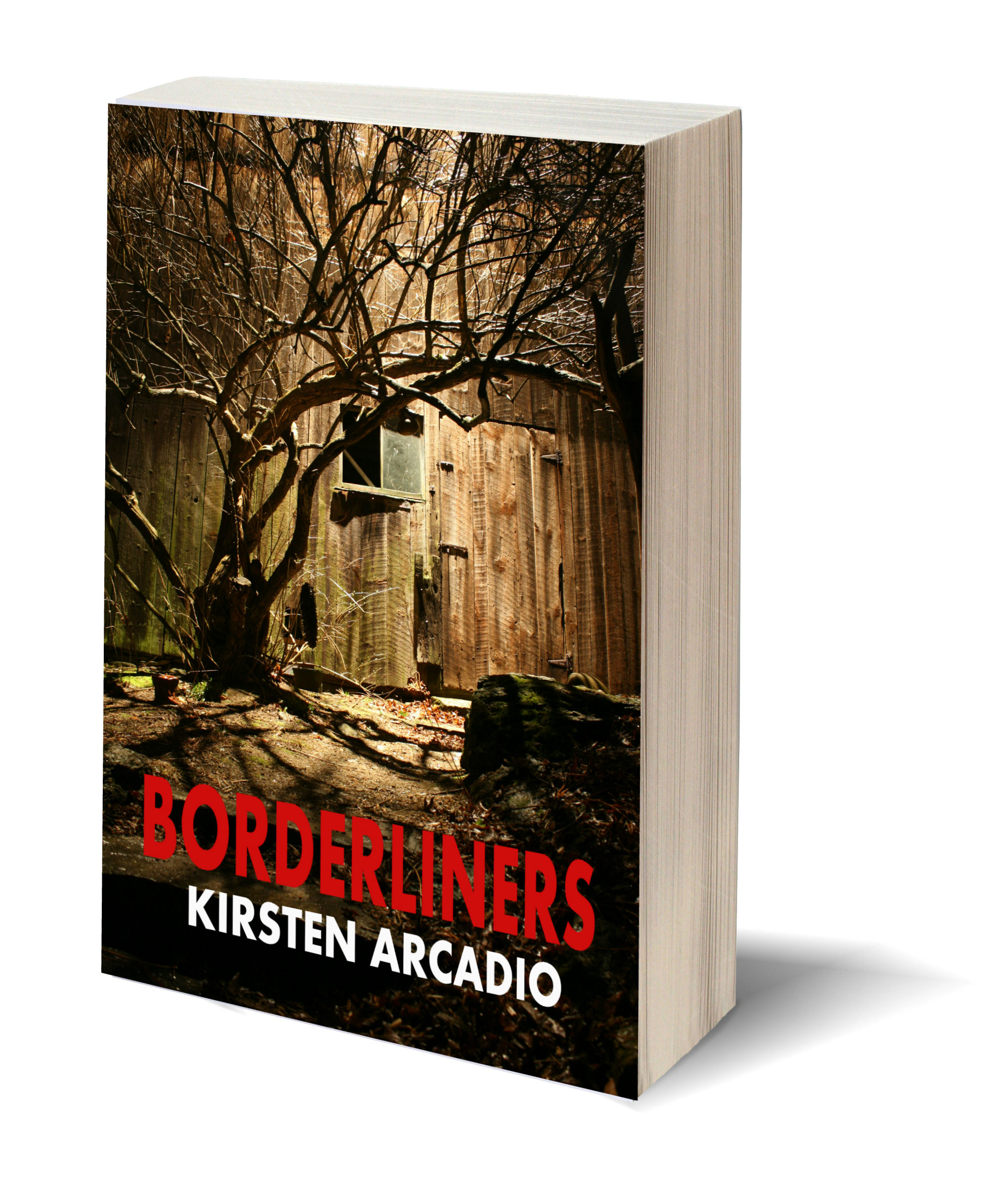
BorderlinersTake my novel, Borderliners, as a case study. Borderliners was released in February. About a troubled psychotherapist who must uncover what is behind a string of deaths in her village, Borderliners was a story I thought would classify as a thriller – but it isn’t really. The process of self-publishing and getting right up close to my audience showed me that hard-core thriller audiences got fed up with the more reflective elements of the book, whereas readers of YA – surprisingly – quite liked it. Since its publication, I’ve played around with the book a lot, placing it in several categories within Amazon. It got lost very quickly in ‘thriller’ but rose in ‘occult’. I tested it in ‘fiction’ (as in general, not literary), but it got lost there too, so currently it’s in ‘juvenile fiction’.

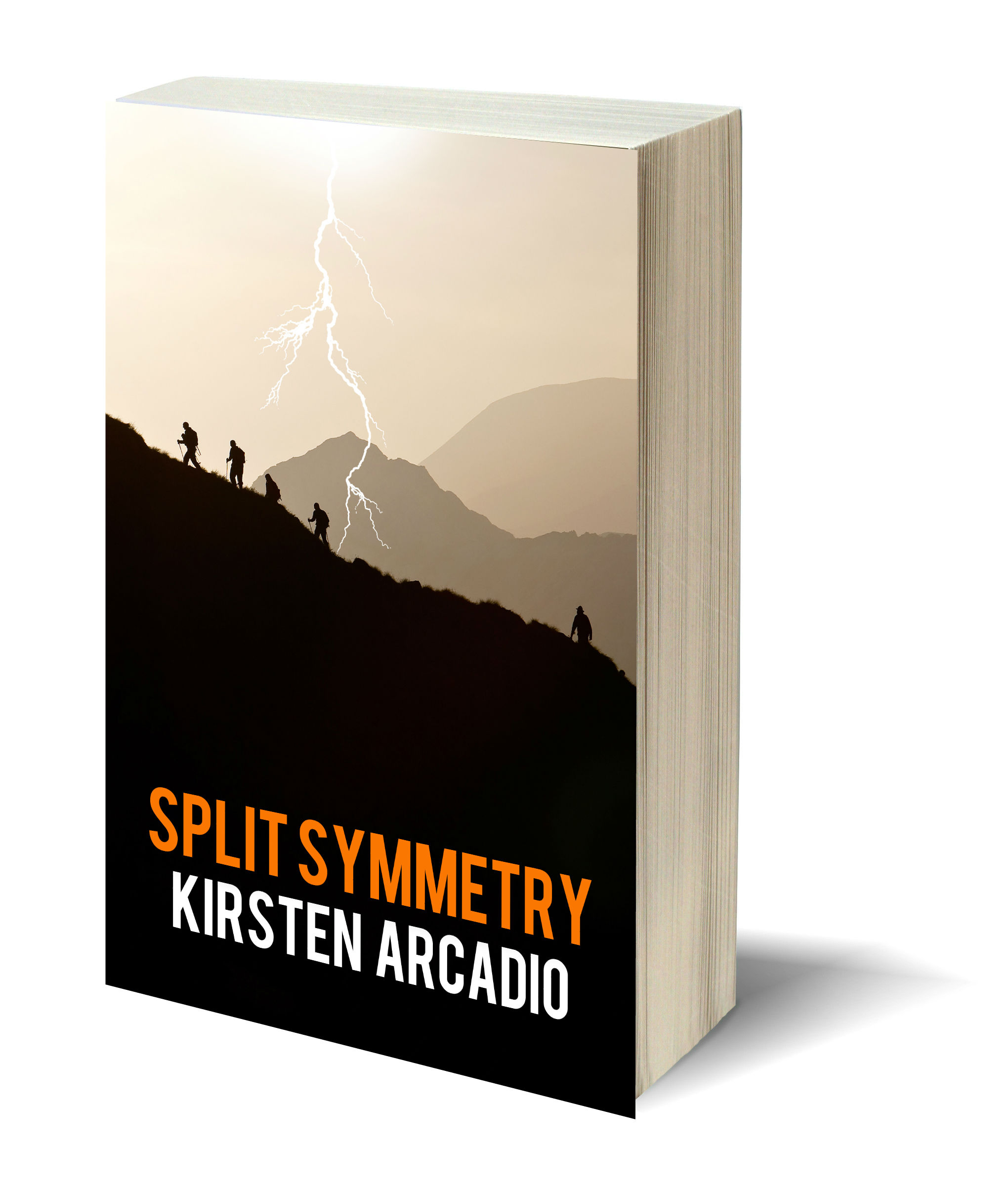
Borderliners was supposed to be my proof of concept, but I don’t think it is fit for that purpose. I made it as good as I could at the time, but in terms of writing for a specific audience, it hasn’t ticked the boxes. That’s OK though, as the marketer in me finds the Borderliners test a fascinating one. It will soon be followed by my second novel, Split Symmetry, which, as a  mixture of adventure thriller and metaphysical love story, is similarly cross-genre. Effectively, Split Symmetry is also a proof of concept experiment.

Genre as classification

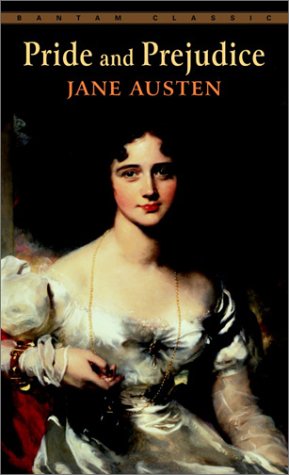
pride-and-prejudiceIn some ways, it’s true that all fiction is, to an extent, cross-genre. As the writer of this Guardian article about genre fiction and classification says, Jane Austen didn’t consider herself to be writing literary fiction. I did snigger a bit at the writer’s re-classification of literary fiction in today’s terms as ‘LitSnob’ – ain’t that the truth. There’s some fantastic story telling and writing within so-called genre fiction, and yet some people feel they are letting the side down if they aren’t constantly reading prose-poetry, not realising that literary fiction is just another marketers’ classification of general fiction.

For me, the answer lies somewhere in between. I’m a big fan of CJ Lyons’ smart approach. She writes thrillers which would be considered cross-genre as they contain romantic elements. So rather than just allow her books to sink and dwindle in the nether regions of Amazon and the like, she used crossroads positioning to find her niche – ‘Thrillers with heart’.

Now, that’s what I call smart marketing. But in order to execute this kind of positioning in your chosen market, you must first know what your market reads, and why. You must know what else your market reads and find your competitive space, and you must be sure your competitive space is wide enough for you to enter – and not too crowded! Early competitive advantage is key.

So that’s me back to the drawing board. Back to school, as it were, to study genres and their audiences and hopefully afterwards, back into the field armed with knowledge which will help me execute my own killer positioning.

Comments Off on Genre marketing

Filed under Novel writing

When does multiverse speculation cross into fantasy?

james-elena-kiss-quantum-universeIn this article in the New Scientist, the question is asked, Does the idea of parallel universes really describe reality?

inflationary cosmologists have opened the speculative throttle so fully that physicists now talk routinely of such things as an infinitude of parallel universes, or a “multiverse”. In the multiverse, every conceivable world exists, and individuals identical to you and I live out parallel lives in places we cannot have access to.

The article talks about a book by Max Tegmark, ‘In Our Mathematical Universe, which talks about seemingly outlandish theories of multiverses as ‘almost obvious and unavoidable’.

He sets out four types of parallel universe:

His first set, the Level I Multiverse, refers to an idea that many cosmologists already accept. Rapid early inflation would have created what Tegmark describes as “universe-sized parts of space so far away from us that light from them hasn’t had time to reach us”. These other domains – or “universes” – could well exist, although we currently have no observational evidence for them.

Tegmark’s Level II Multiverse refers to a bolder idea, championed by physicist Alexander Vilenkin and others. There may be other domains of space also created by inflation that are too far away to see. These will forever remain out of our reach because continuing inflation drives them from us faster than the speed of light. This idea refers to real, distinct, physical universes that cannot ever be observed.

At this point in the taxonomy, however, Tegmark leaves cosmology behind. In reading, I began to feel that his aim is to see parallel universes in as many places as he can. Enter the Level III Multiverse. This turns out to be a language for talking about the mathematics of quantum theory using the many worlds interpretation of that theory, first proposed by physicist Hugh Everett in the 1950s.

This interpretation describes all physical processes as part of an ongoing, perpetual branching of the universe into many other universes. It is indeed possible to interpret quantum theory this way, but readers should know that many other interpretations, equally in tune with observations, don’t invoke the idea of parallel universes at all.

Then there is the Level IV Multiverse. Again, this has nothing to do with cosmology, but is an ambitious thought about mathematics. Tegmark argues that reality isn’t simply described by mathematics, as most physicists readily accept, but that it is, in fact, mathematical.

Of course, the parallel universe glimpsed in Split Symmetry is pure fantasy…

Comments Off on When does multiverse speculation cross into fantasy?

Filed under Uncategorized

Cults, religion and mystery

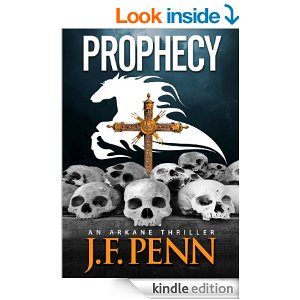
prophecy by J F PennI’ve always been interested in what I felt were underground themes around religions and cults. So  I had something of an epiphany moment today when I logged onto Twitter and read through my usual feeds, one of which is made up of writers and publishing professionals. One of the most useful Twitter profiles I follow is @thecreativepenn aka Joanna Penn, a successful self-published author who has now become very much the authority on all things self-publishing.

At the same time, I’ve been agonising lots about my first novel, Borderliners, and the novels which will follow it.

In Borderliners I explore themes around religious beliefs and how people in religious organisations sometimes abuse power. I also look at mental ill health, the fine line between reality and illusion and how our perception may be the only constant. Where is the truth? Who are we, really? What if time isn’t linear? I feel there’s an overlap between what we believe to be ‘supernatural’ and the more acceptable notion of ‘metaphysical’, and this is something I like to mine. It’s very difficult to pull off, and I live in a constant state of anxiety that I may offend my readers’ beliefs (something I don’t want to do), or anger them. I’m also surprised how some readers get to the heart of what I’m exploring and others just don’t get it at all. I notice polarized reactions to my work, not just the novel which is published, but my following novel which is doing its third and final round of beta-readings. Probably, the same thing will happen with my third novel.

It came as a fantastic surprise to me, then, when I realised the person I had been following for self-publishing advice, is also author of novels with (on the face of it) some similar themes to mine. This probably should have been evident, but I was so busy lapping up all the publishing posts that I didn’t notice the actual content of her novels! Doh! Soon to be rectified, I downloaded two of them straight away. In the meantime, I looked back through her interview with Jen Blood (@JenBlood),author of the Erin Solomon mysteries, another series which examines themes of cults, religions and supernatural. I also then downloaded a couple of Jen’s novels too.

Here’s an excerpt, where Joanna and Jen talk about the tricky balance an author of such books must strike between respecting beliefs and exploring the themes which surround them:

So, how do your personal beliefs weave into your books, and how do you walk the line between respect of other people’s faiths and writing?

Jen: I think that for me, it really is, I have a fairly good idea of what I believe at this point, and it’s certainly not a traditional Christian model by any means. So, for me, it really has been something where my characters, I try to think of my characters as organically as possible, so just as I’m a person who’s shaped by my experiences, they’re people – even if they’re fictional people- who are shaped by their experiences. So, for example, Diggs is a hardcore atheist, he’s just that. And Erin is an agnostic, and she’s trying to figure out exactly how her early experiences gel with where she is now.

So, I kind of feel like at this point, it really is separate. Because I do believe that religion is such a personal thing for people: I feel very strongly that people need to sort out their own spirituality, and figure out where they come from and how that informs their life, basically. So I want readers to be able to do the same thing, where they don’t feel like my beliefs are being forced on them, and Erin and Diggs at the same time have their beliefs, and there’s no judgment or forcing of their views on other people. If that makes sense!

Joanna: It is a difficult line to walk, and I struggle all the time with it, and also wanting to respect everyone’s beliefs. But of course, it’s very difficult, because everyone has different things. But you have it doubly worse, I think, because you’re in America, and my one-star reviews are generally from religious Americans! Do you get any kind of nasty emails or reviews? How does that work?

Jen: You know, I’ve been really surprised, and I think that, I have actually consistently been surprised, because I consider myself a fairly liberal kind of person: I’m liberal, I’m definitely very liberal. So I’m often surprised that people who have – not a ton, but I definitely have conservative Christians who really enjoy the books, and I’m very grateful, and I love that they find something in there, and I’m really very pleased that I’ve been able to do this to the point where my views, apparently, haven’t colored things to the point where they’re like, “Well, I’m not reading that!” But, yes, I do occasionally get feedback from people, and it’s usually language.

Joanna: It’s amazing, I think I ritually slaughtered a child and then had a sex scene in a tomb surrounded by dead bodies, and then I get an email that says, “She said the f-word”!

Jen: I know: I’m always amazed by that, and we live in a different world, apparently, because I’m always stunned that people even notice that that’s used, and from the time that I wrote the first book, I’ve really kind of, that’s one of the final things that I do when I’m editing, is I go through and I search for the number of times that I’ve used the f-word, and I limit myself to like four!

Joanna: I limit myself to one!

Jen: Oh, OK! Well, I feel like Diggs would not be happy with just one, he wouldn’t be able to handle it.

Joanna: I even found myself censoring “Damn” – damn really isn’t a swearword, but I get comments about Damn. There’s an interesting thing there: self-censorship. My last book, Desecration, was very dark, and I wrote a lot of really kind of dark things, from my dark self. I did have to come up against: Should I really write this?

The full interview can be found on Joanna Penn’s website.

2 Comments

Filed under Novel writing

The outsider

One of the sources of inspiration for my novel, Borderliners, was the 1942 novel by Albert Camus, The Outsider (or The Stranger in some translations).

The alien feeling the novel evokes is very powerful. Camus himself said his protagonist

is condemned because he does not play the game.

Elena

My protagonist, Elena Lewis, is also an outsider. Having arrived in her isolated village eighteen months earlier to set herself up as a psychotherapist to the local community, she finds she is unable to integrate.

Having experienced this three times in my own life – once in a small town in the Home Counties when I was a child, once in Northern Germany during a sandwich year as a student and once more recently as an adult – I feel that some people are destined to be city dwellers, preferring the anonymous transience and comforting unity brought about by the idea of being an outsider in a wider community of outsiders. This, of course, makes you an insider of sorts.

But being a real outsider in a small community is no joke.

Elena’s character traits make it more difficult for her to integrate: she’s independent, self contained but also highly introspective and suffers bouts of depressive illness. The combination of these traits make it difficult for those on the inside to either understand or reach out to her. They think, she doesn’t need anyone.

All the lonely people

In a society where more than one in four of us lives in a singleton household and where those of who do live with family often remain isolated in other, more subtle ways, the idea of the outsider was an important one for me. Appearances are deceptive. More people are out the outside than we imagine. As philosopher Henry David Thoreau said,

‘The mass of men lead lives of quiet desperation.’

Elena doesn’t play the game either and quickly finds herself up against those who have the rest of the village dancing to their tune. Going against the grain carries punishment, sometimes subtle, sometimes harsh.

Comments Off on The outsider

Filed under Uncategorized